MCR Engineering Revision
January 8th, 2026
Author: Evan Peters VE7ITX

Empowering the future of amateur radio and digital communications
We’re excited to share a major milestone in the Modular CubeSat Radio (MCR) project: qualification testing of the pre-flight engineering model is now complete. With this step finished, the MCR has reached the end of its development and iteration phase and is transitioning into the three-unit flight hardware “production” run for MARMOTSat.
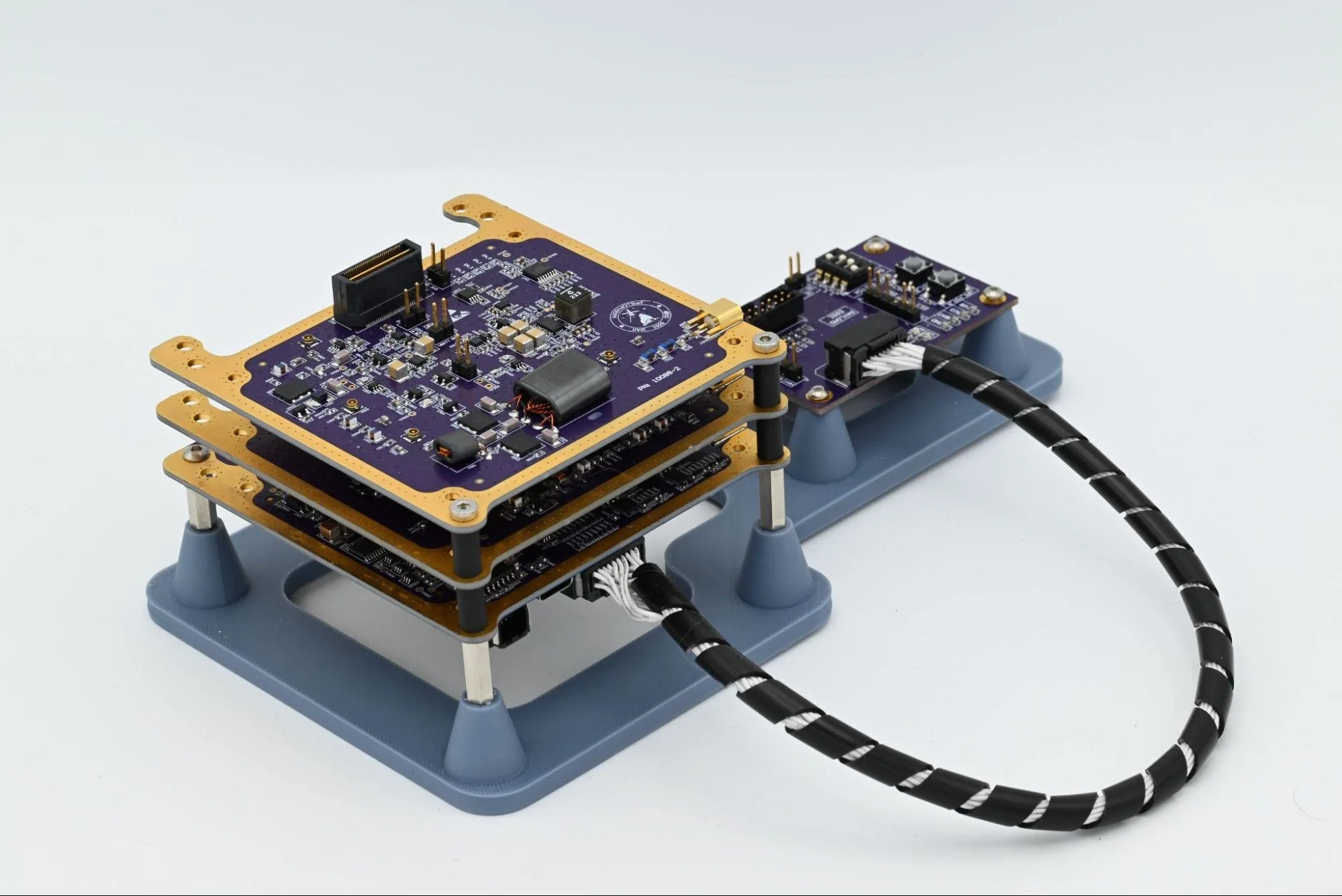
MCR Engineering Model Stackup
Over the past development cycle, the engineering model has undergone a full round of qualification testing intended to simulate the stresses and conditions expected during launch and on-orbit operations. These tests included RF characteristic tests, thermal testing, and initial vibration testing, helping to validate both the electrical performance and mechanical robustness of the system. Overall, the results met our expectations and provided confidence that the MCR architecture is fundamentally sound, while also demonstrating the successful incorporation of several key design changes proposed in the previous update.
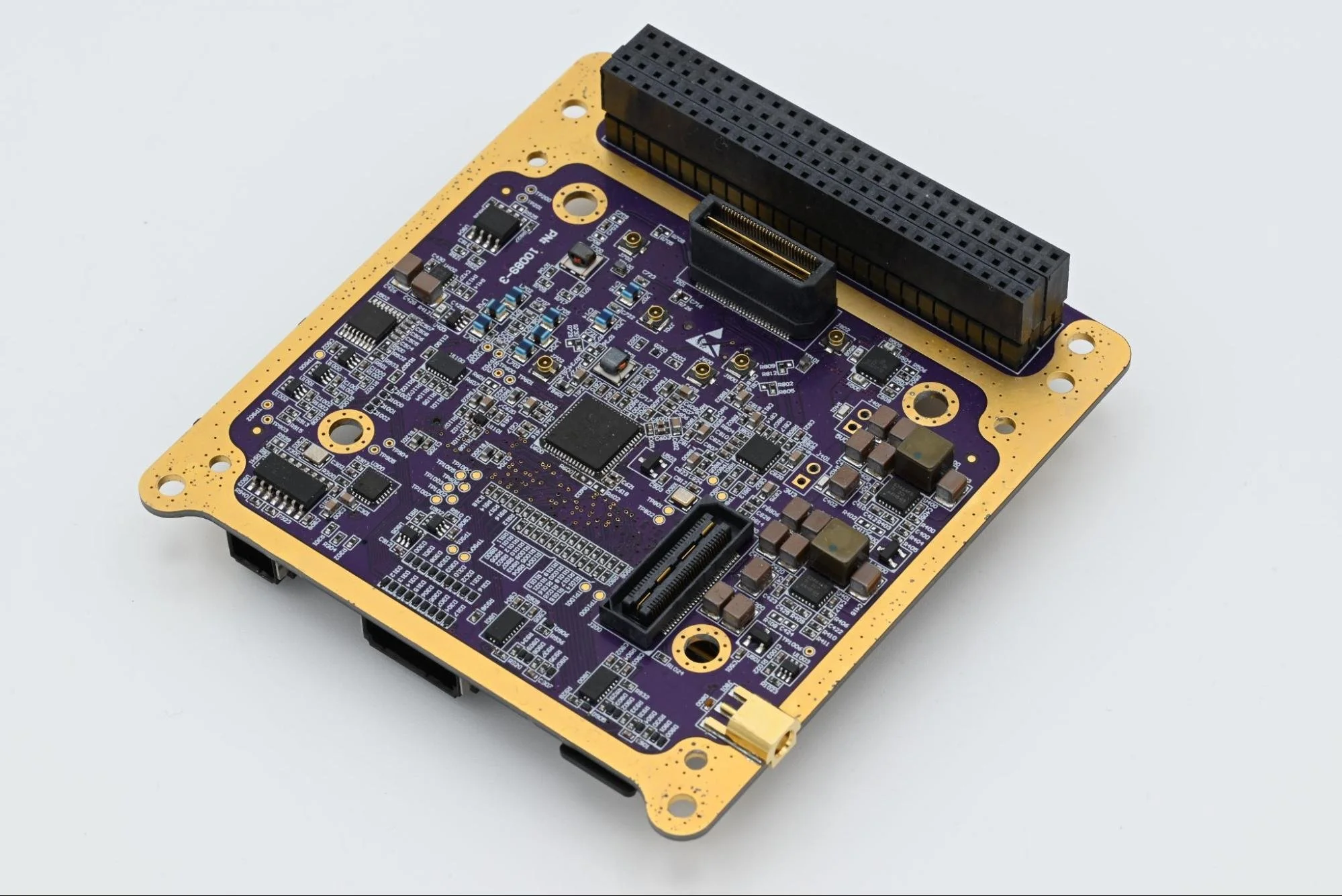
MCR Core
One of the most significant changes since earlier prototypes is architectural: the previously separate software-defined radio (SDR) board and computer carrier have now been combined into a single MCR “core”. This integration reduces internal interfaces, lowers mass, and simplifies assembly, while also significantly improving power distribution and signal integrity. From an outreach perspective, this also makes the system easier to understand and reproduce—an important goal for an open, accessible CubeSat radio platform.
Internally, we have also streamlined the digital side of the design. The Cyclone-IV FPGA previously used on the SDR has been replaced by the FPGA fabric already present on the Kria K24’s Zynq Ultrascale+ processor die. Consolidating FPGA resources reduces component count, points of failure, and power overhead, while enabling tighter integration between the digital signal processing and onboard computing, opening the door for more advanced experiments in future missions.
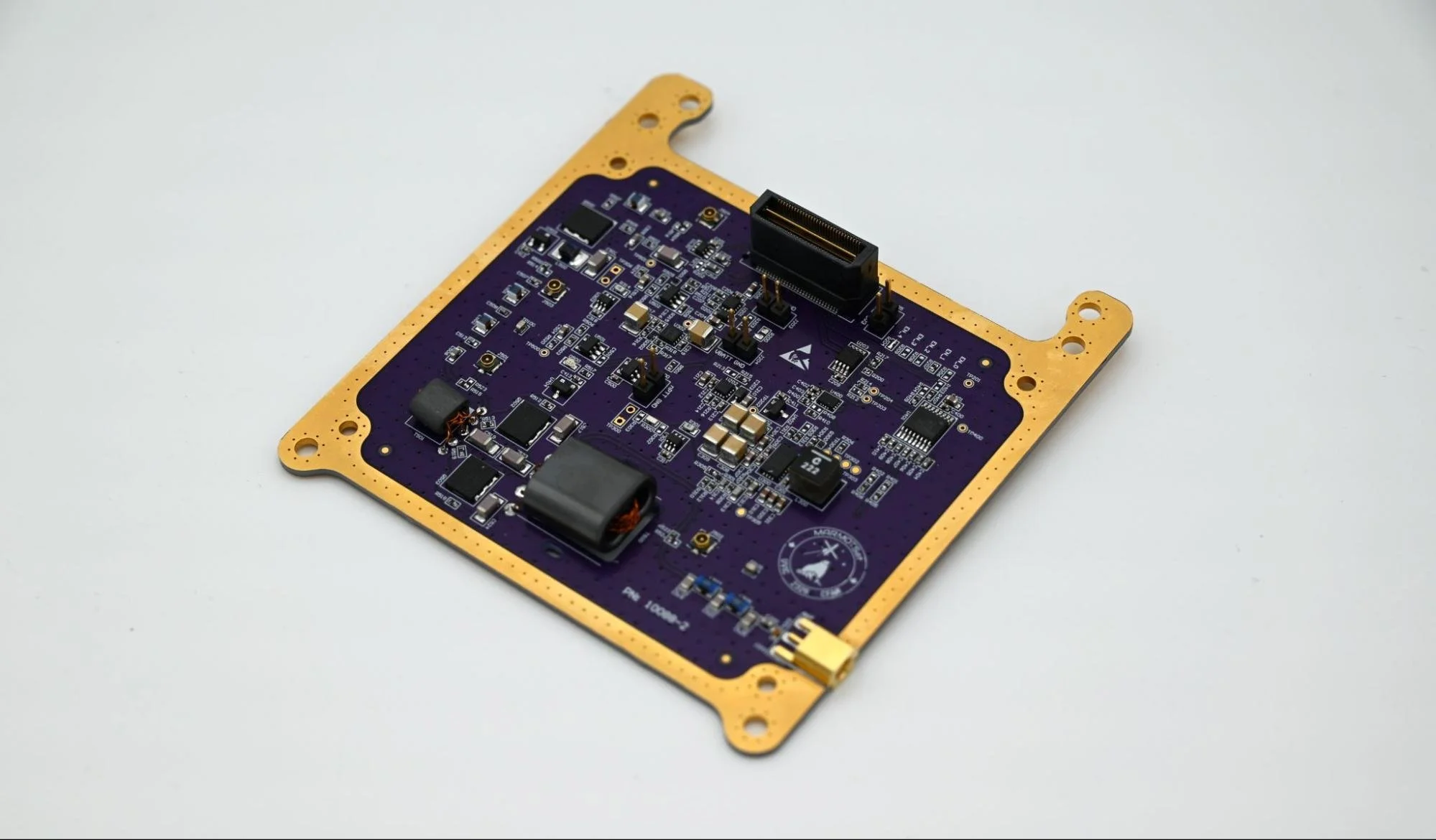
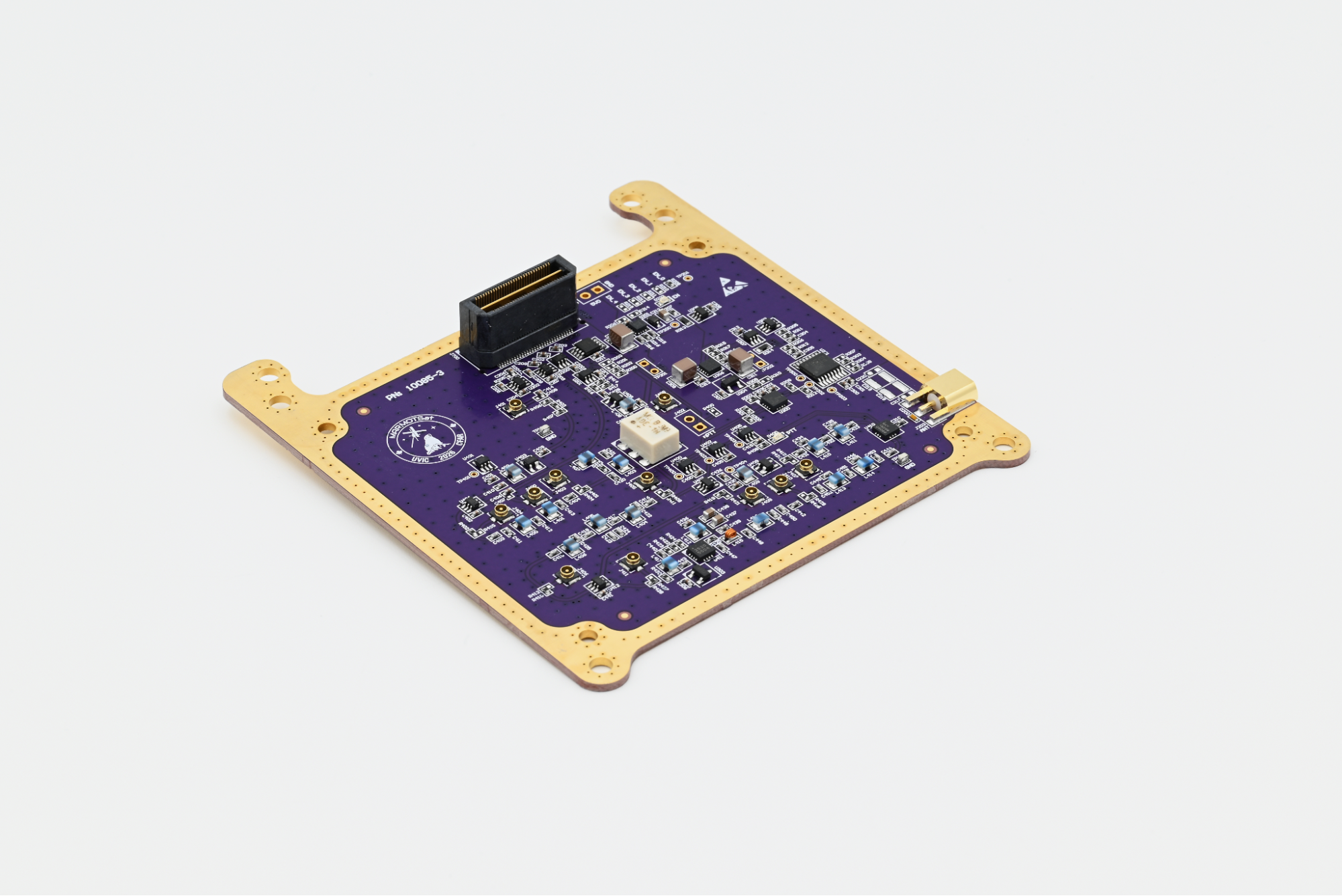
HF Power Amplifier (Top) and VHF Transverter (Bottom) Frontend Boards
Another major improvement was the replacement of coaxial RF interconnect cables with impedance-controlled board-to-board connectors. This change improves mechanical robustness, repeatability, and ensures more consistent RF performance across the vibration and thermal cycling environments typical of space missions.
Finally, the camera interface has been updated. The original MIPI-CSI-2 connector was replaced with an RS-485 serial camera interface, trading raw bandwidth for simplicity and robustness. This change better aligns with the project’s emphasis on reliability and ease of integration, while reducing observed EMI in a compact spacecraft. On MARMOTSat, this change also includes the switch to MVP Aerospace’s KISSCam V1.

Representative KISSCAM V1 Image of Italy from the MVP Aerospace Website
With qualification testing complete and all changes incorporated, the project now moves into its next phase. Three candidate flight models will be ordered and assembled in the coming weeks. Each unit will undergo acceptance testing to confirm functionality against requirements, followed by extended burn-in testing in a flatsat configuration. This process will help identify early-life failures and further build confidence ahead of flight integration.
As always, we’re grateful for the continued support from ARDC and the broader Amateur and CubeSat communities. The MCR is steadily evolving from a promising concept into a flight-proven, open-access radio platform, and we’re looking forward to sharing more results as the candidate flight models come online.
