Science Rendezvous Mission Control Tours
June 11th, 2026
Author: Forrester Munroe Parlee VE7FPM
On May 9th, the University of Victoria (UVic) hosted Science Rendezvous, an annual STEM showcase which provides community members, primarily K-12 students and their families, a unique opportunity to engage with STEM subjects in a tangible way.

Fig. An undergraduate engineering student (Munroe, VE7FPM) presents a scale model of the UVic satellite MARMOTSat. On the left is a Solar System Ambassador with NASA's Jet Propulsion Laboratory (Matt, VA7USD).
Included was a series of Mission Control tours, showcasing the UVic Radio Propagation Laboratory which contains mission control equipment essential to the command and control of UVic’s soon-to-launch atmospheric research and amateur radio satellite project, MARMOTSat. Tours were hosted by a group of volunteers including members of the undergraduate UVic Satellite Design club, experienced amateur radio operators, and a community member from the NASA JPL Solar Ambassador’s program.
Tour participants viewed presentations on cube satellites, viewed videos of the assembly and deployment of a UVic satellite, interacted with accurate full scale satellite models, and asked engaging questions. They also learned about the history of amateur radio, viewed and operated certain radio equipment, and viewed the antenna masts which will be used for satellite communications during orbital flight operations later this summer.
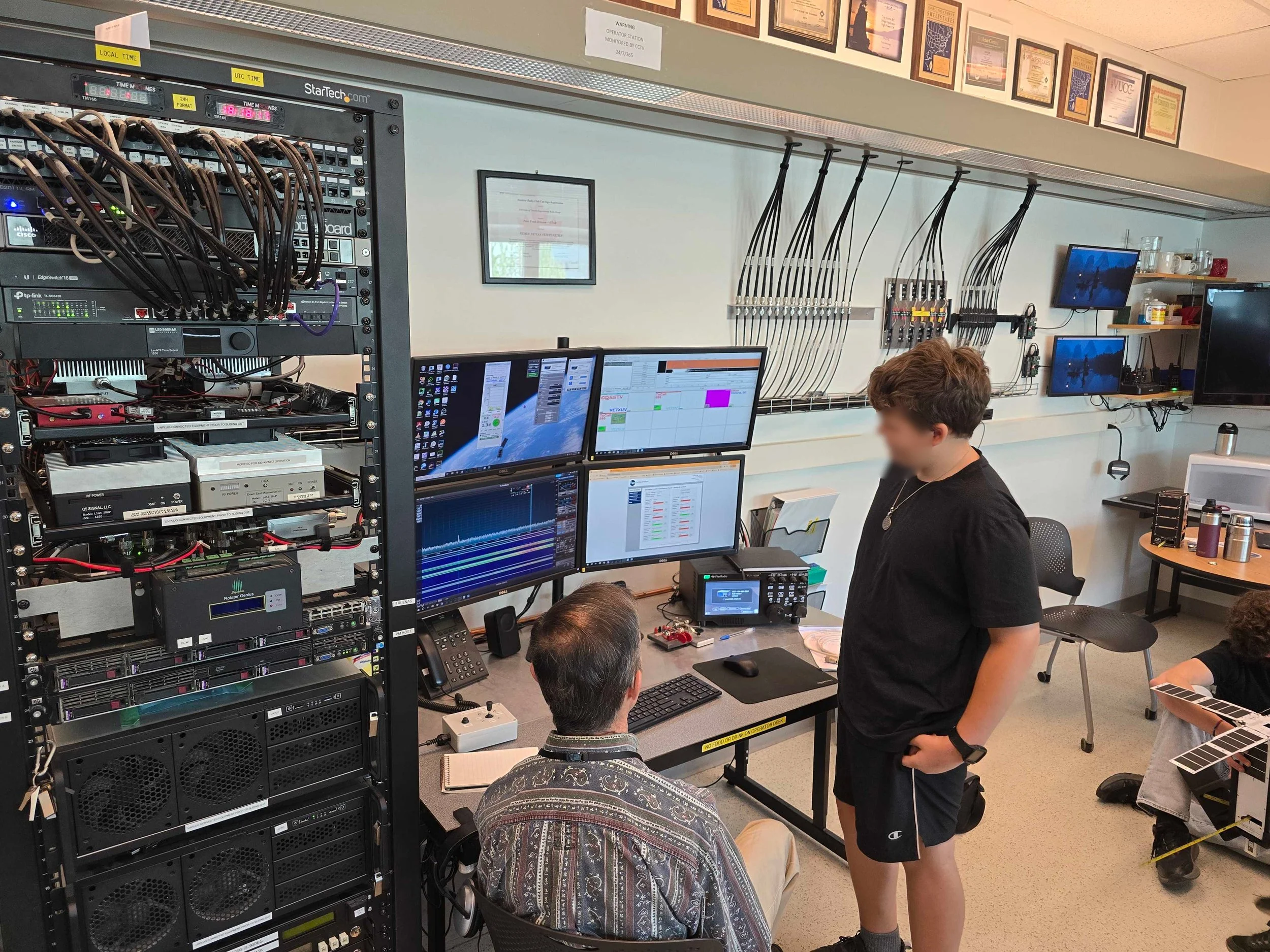
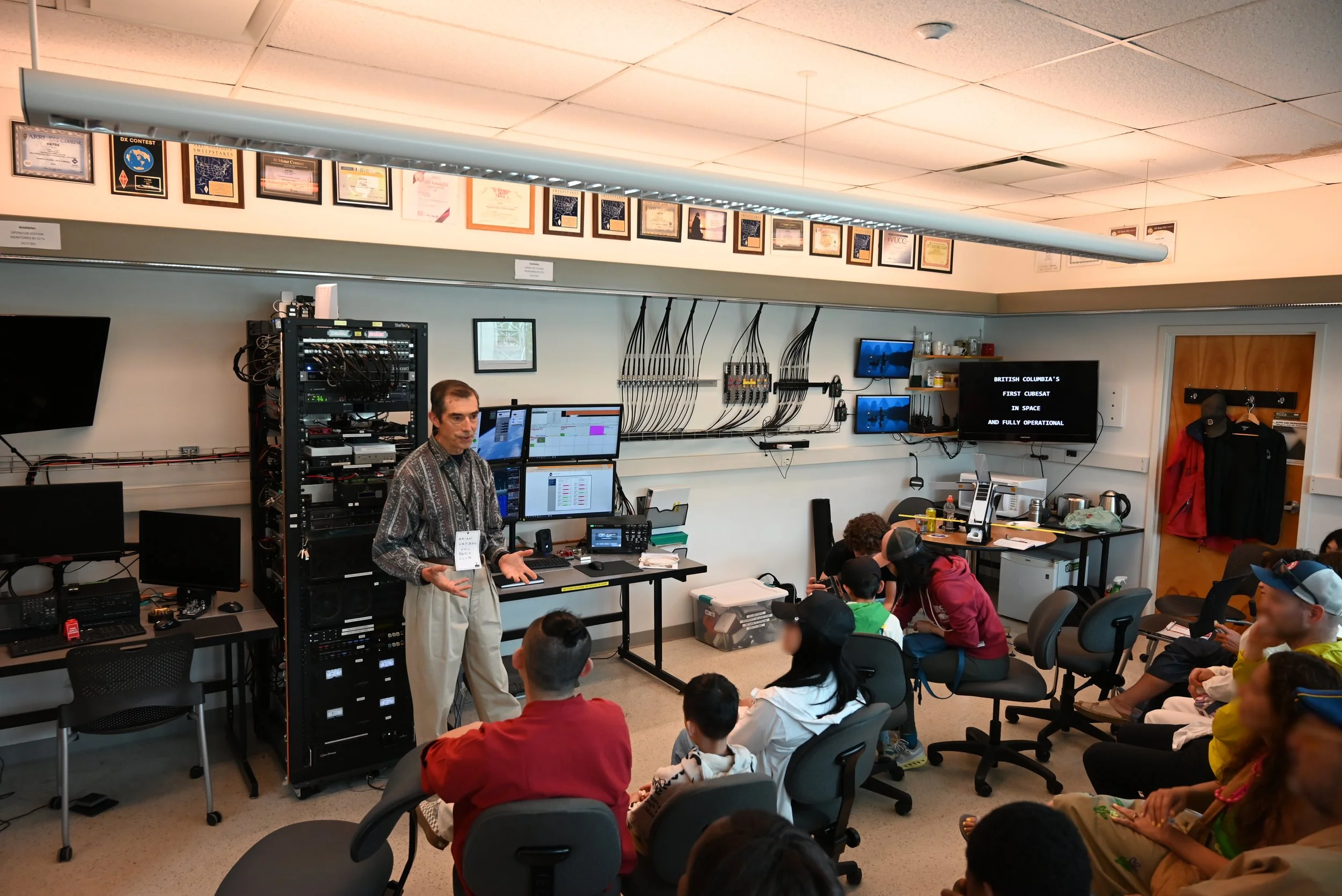

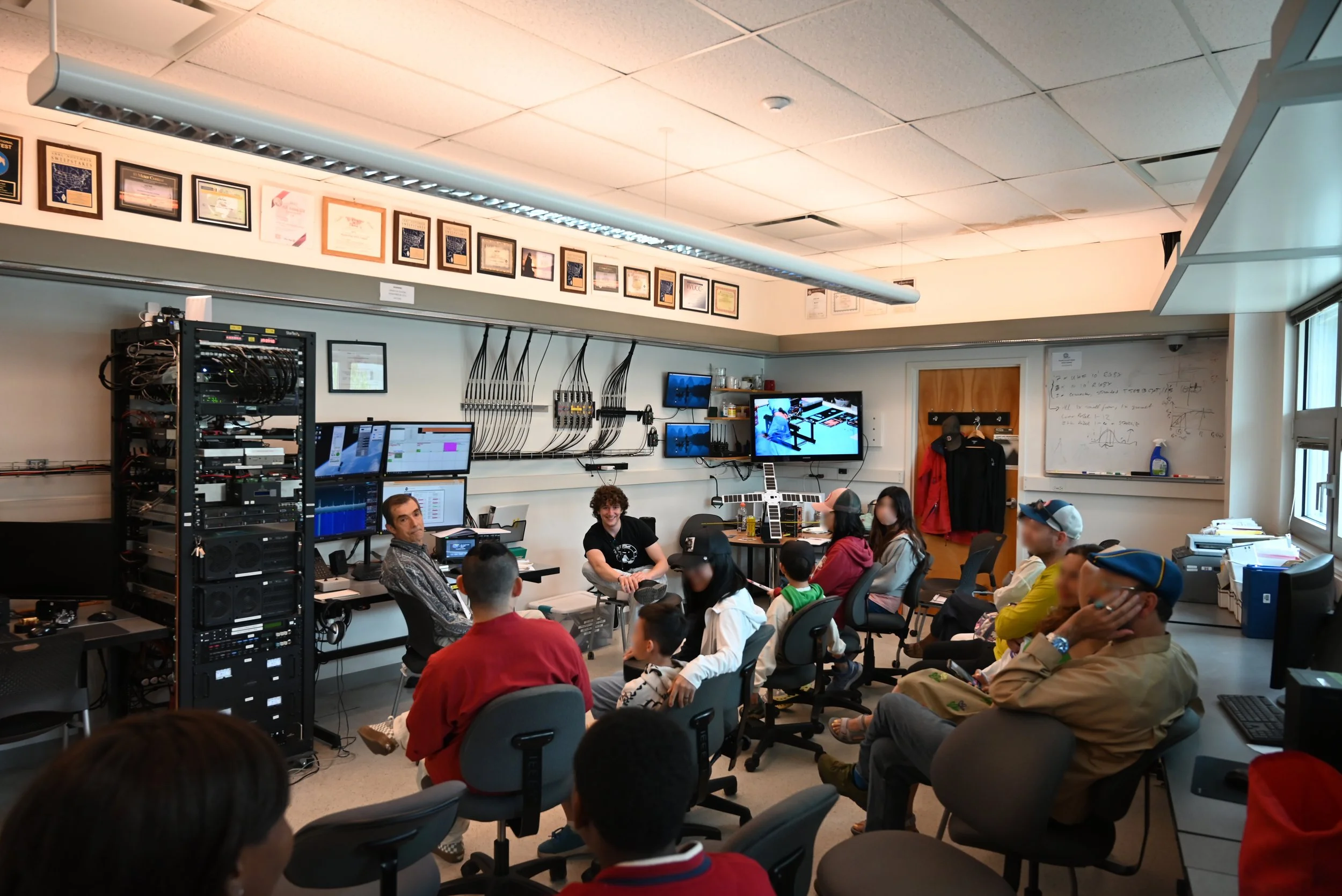
Gallery: An experienced amateur radio operator volunteer (Brian, VA7BXL) talks about amateur radio and community members get closeup looks at the ORCASat model and the station equipment.
One subject covered were two cube satellite projects, ORCASat and MARMOTSat, both of which were developed by the UVic campus aerospace community through the involvement of hundreds of student volunteers and dozens of full-time co-operative education engineering undergraduate students. ORCASat, which launched from the International Space Station in 2022 for a mission duration of 195 days (December 2022-July 2023), was an ‘artificial star’, and British Columbia’s first CubeSat operated in space. Designed for calibration of astronomical telescopes, it acted as a known light source which would allow terrestrial observers to account for atmospheric interference in observations of deep space. Building off of the successes of ORCASat, MARMOTSat is an atmospheric research and amateur radio satellite currently slated for launch in July 2026.
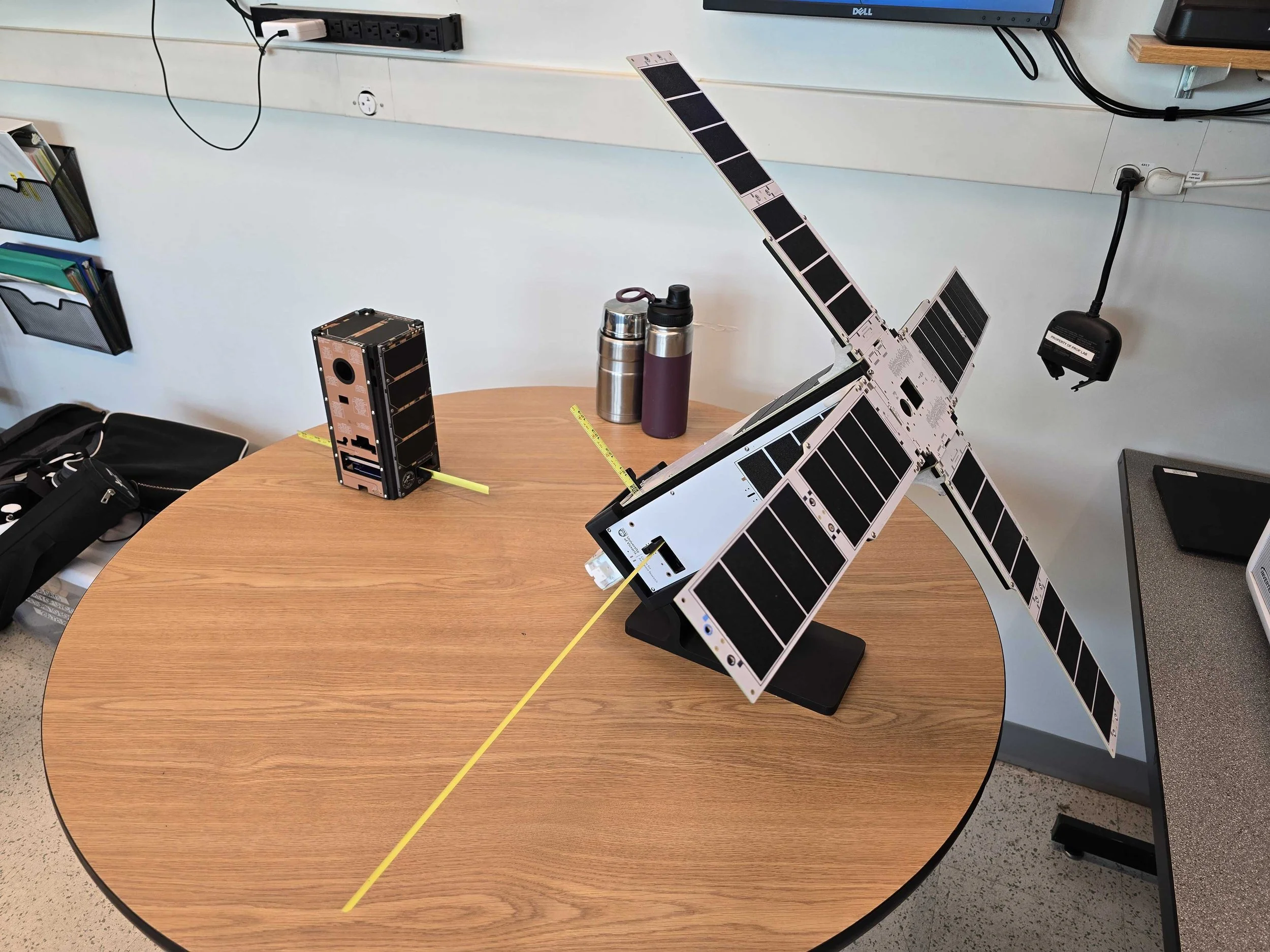

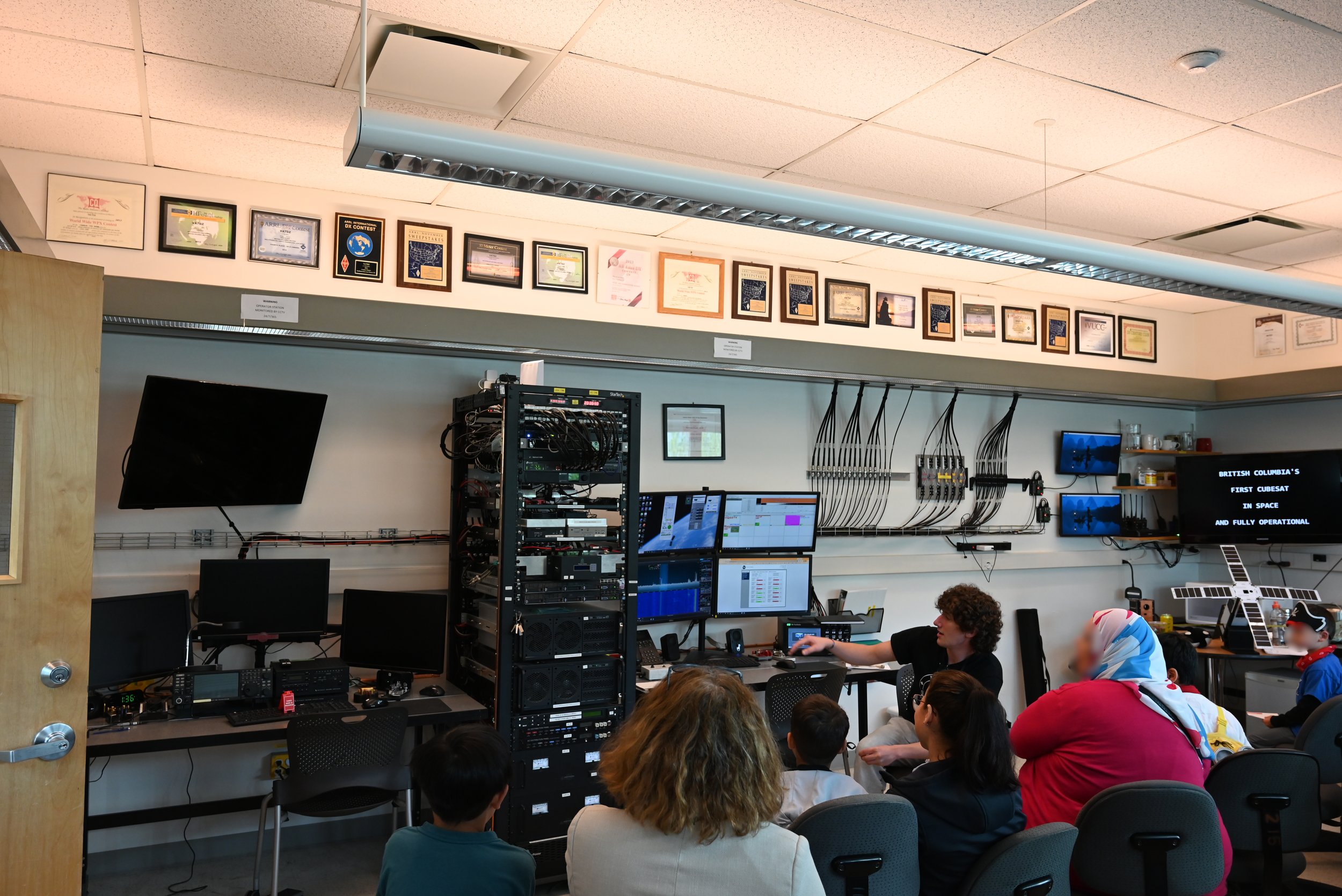
Gallery: ORCASat and MARMOTSat models; ORCASat model presentation; Mission control explanation.
The tours were a success, with approximately 100 community participants between the ages of 6-65. We are delighted to have been able to facilitate this opportunity, and we are grateful to be able to give back to the wider STEM community. Stay tuned for more updates!
