Flight Spacecraft Vibration Testing
April 14th, 2026
Author: Evan McDowell VE7XEM
In order to qualify for launch, MARMOTSat is required to undergo vibration testing to ensure it could handle the shaking and spinning associated with riding on a SpaceX’s Falcon 9 rocket without endangering other payloads. UVic CfAR had the privilege of conducting these tests at the Longueuil, QC laboratories of Canadian Space Agency’s (CSA/ASC).
Between March 10 and 13, two representatives from UVic CfAR travelled to the CSA’s headquarters and conducted vibration testing, with prescribed assessments for each of MARMOTSat’s coordinate axes. After much a priori discussions, preparations, and a formal written test plan; the team has received a warm welcome from the CSA representatives, and work quickly began on preparing the CubeSat for the actual vibration test.
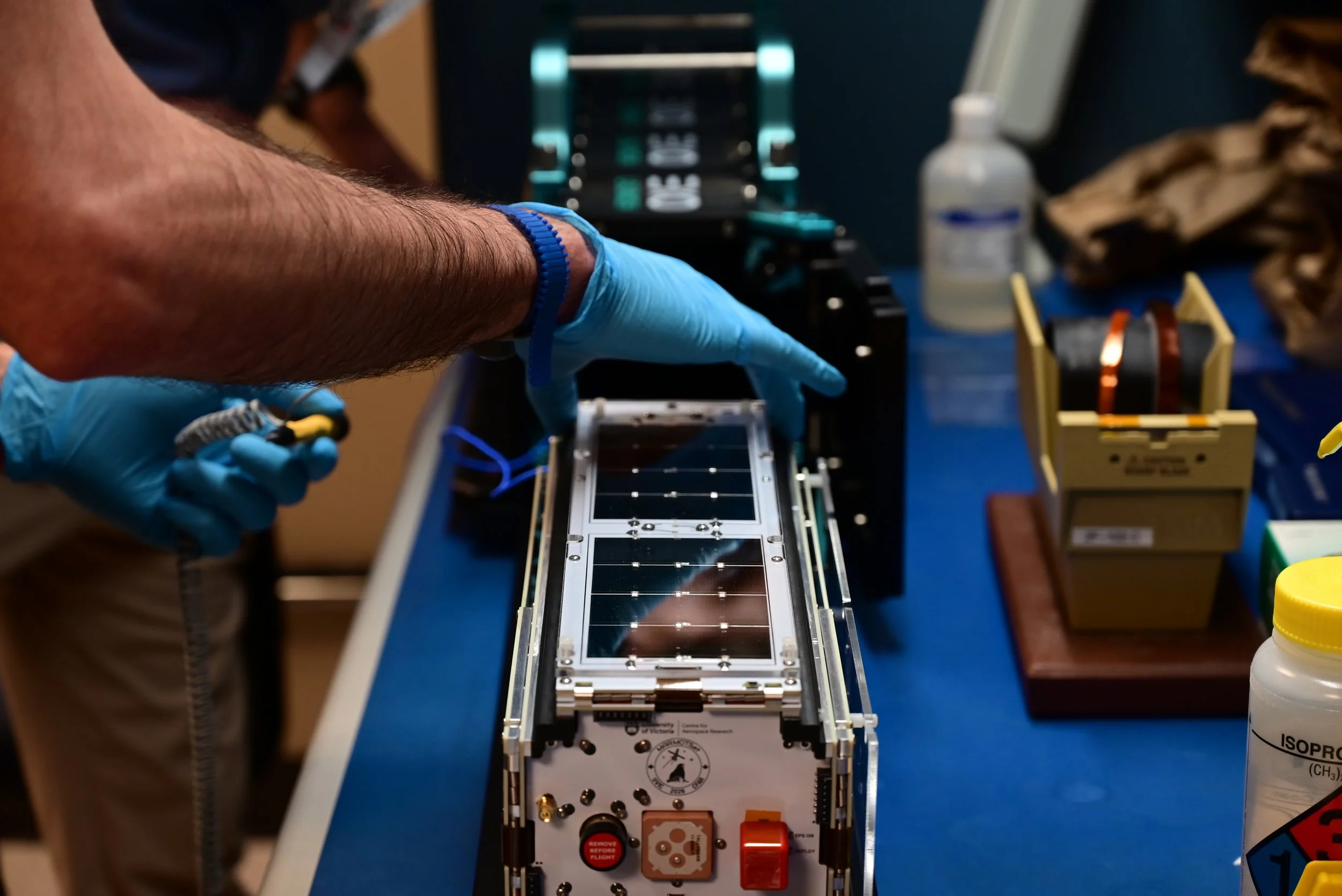
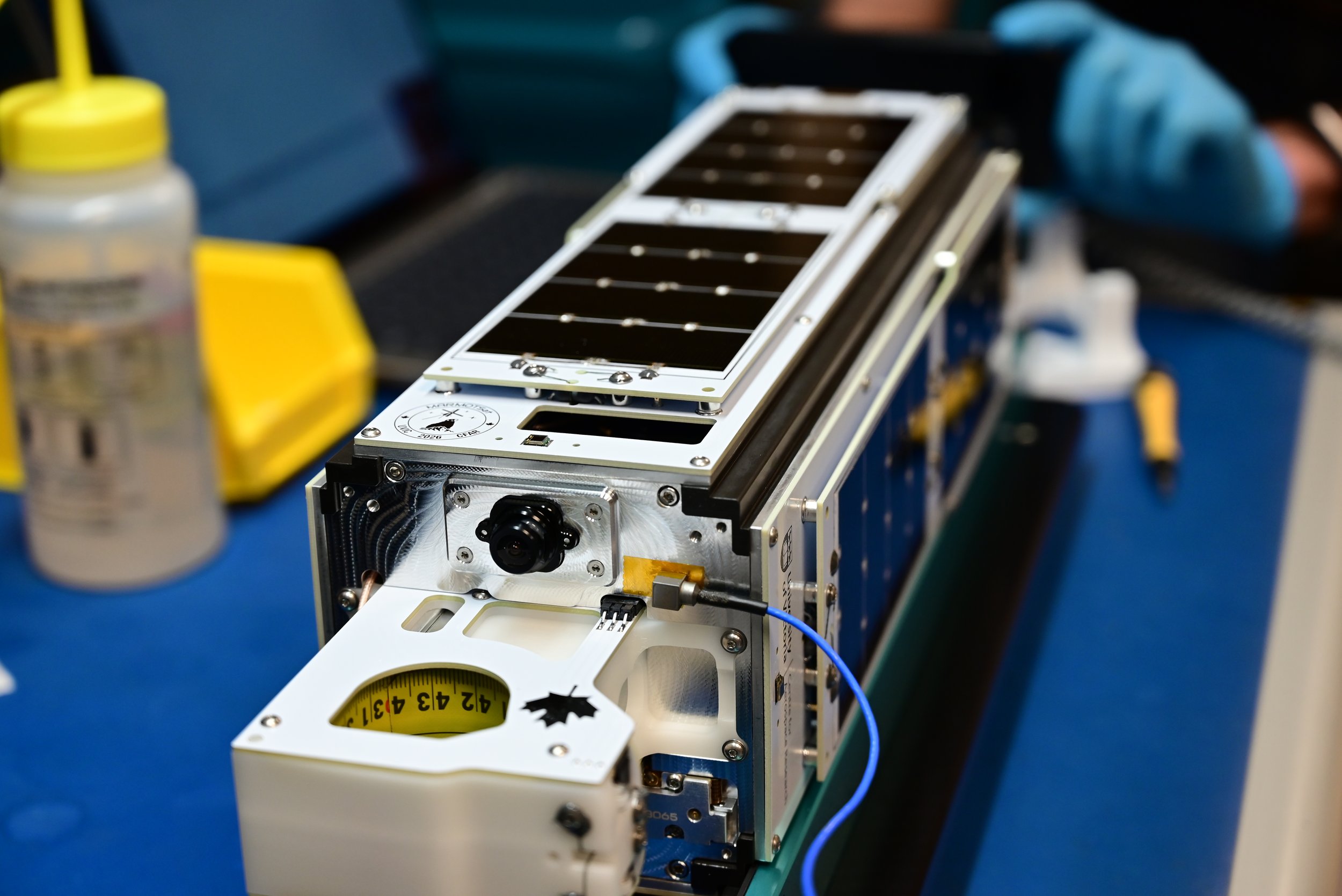
To accurately simulate deployment/transport housing in the rocket, Exolaunch, the company responsible for working with SpaceX to deploy MARMOTSat on behalf of the CSA and UVic provided a specialized test pod called the Nova Test Pod that would accurately represent the conditions in which MARMOTSat would be carried in for launch. After placing an accelerometer on the CubeSat, MARMOTSat was sealed in this device and attached to the vibration table.
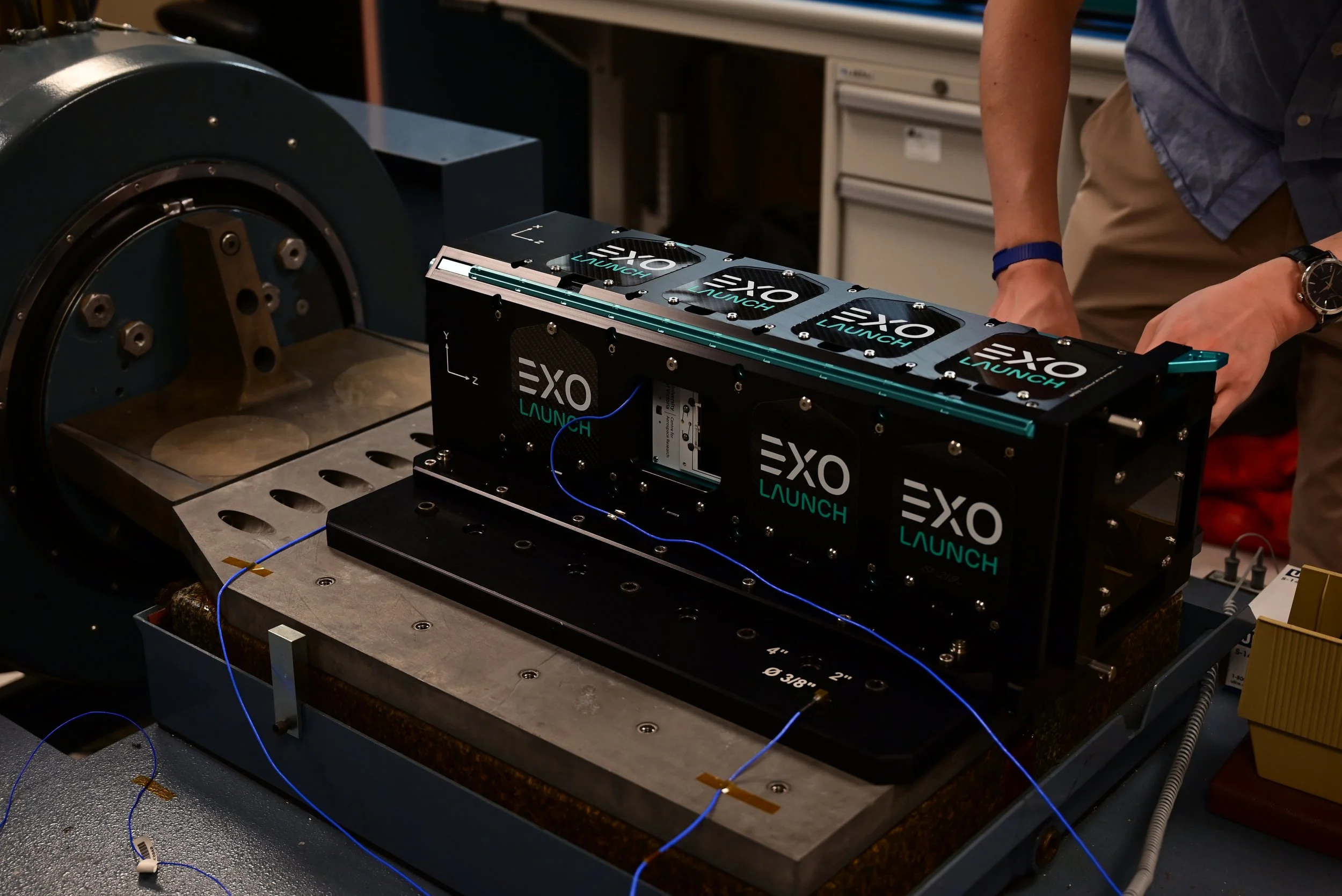
As per the test procedure, running the Z-axis vibration test was expected to be the most likely to cause issues, and was completed first. However, by passing with flying colours, and showing no concerning modes, the CubeSat appeared to be in the clear. By completing all the preparations and Z-axis testing on day one, MARMOTSat was ready to be reoriented on the vibration table for its X- and Y- axes on the next day of testing.
Given the successful and productive first day of testing, during the second day of the campaign, our delegates had the opportunity to tour the CSA campus and explore the many cutting edge capabilities being developed or operated by the CSA. Before recommending the testing activities with the remainder of the axis, the team also had the pleasure of meeting the CSA President, Lisa Campbell, bringing her up to speed on the objectives and history of MARMOTSat, and outlining the impact this unique opportunity has had on the career of UVic students involved in the development.
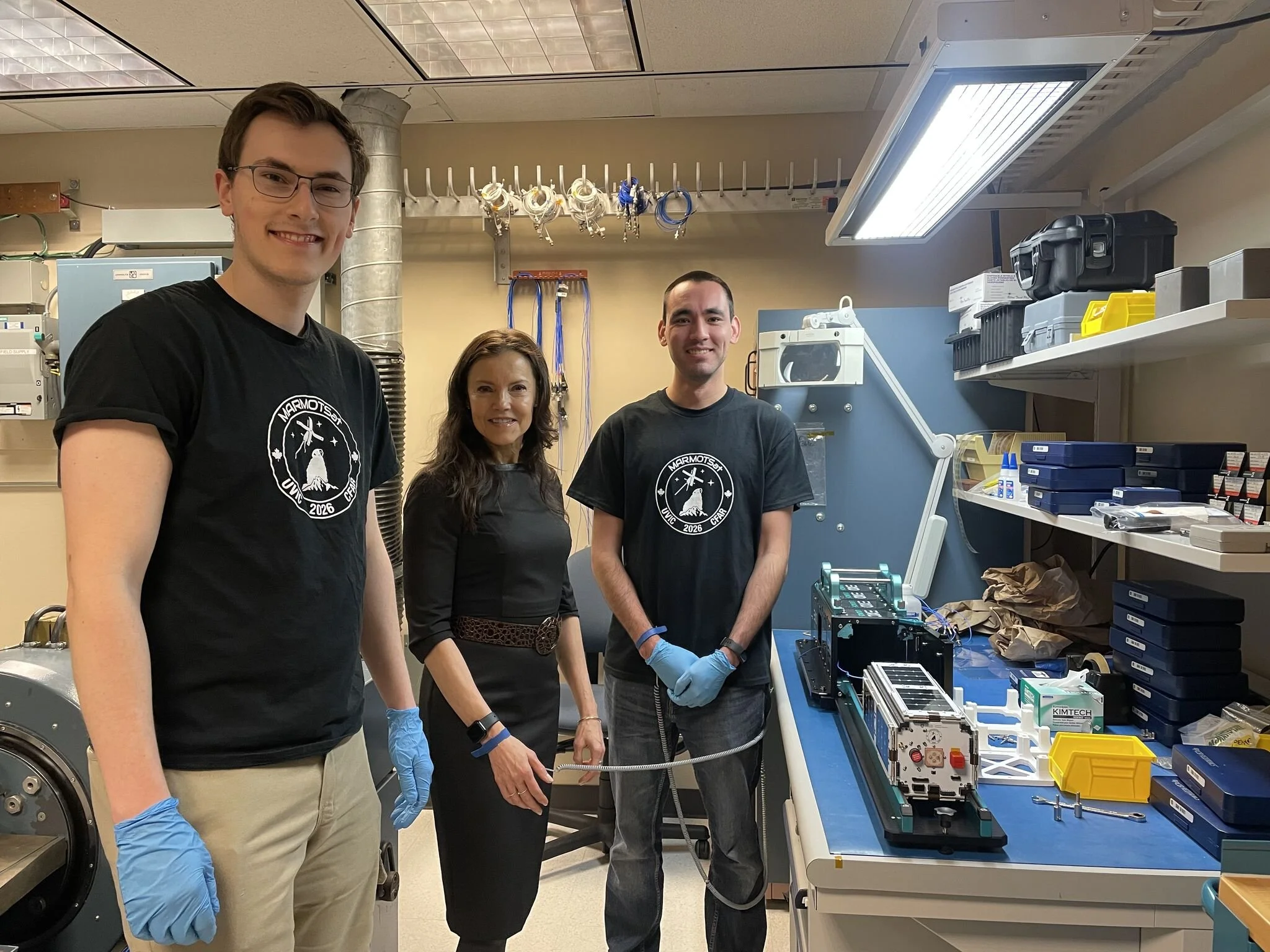
After the morning engagements, the test evaluating the X and Y axes were completed with no concerning modes as well. Subsequently, the CubeSat was removed from the test pod and checked to see if all systems were still functioning as expected, and that the system itself did not prematurely turn on during the testing, which was found to be the case.
Successfully passing tests in all three axes, and demonstrating a fully functional system post vibrations was the outcome what the team was hoping for; and the certainty required by the launch provider to manifest MARMOTSat on Transporter-17. As a result, the team is now working towards integration, with only software changes permitted between the completion of vibration testing and this next milestone.
We would like to sincerely thank the CSA for the financial support, access and mentorship that they provided for the UVic team for this important milestone. Stay tuned for more updates, which will be posted here as usual.
